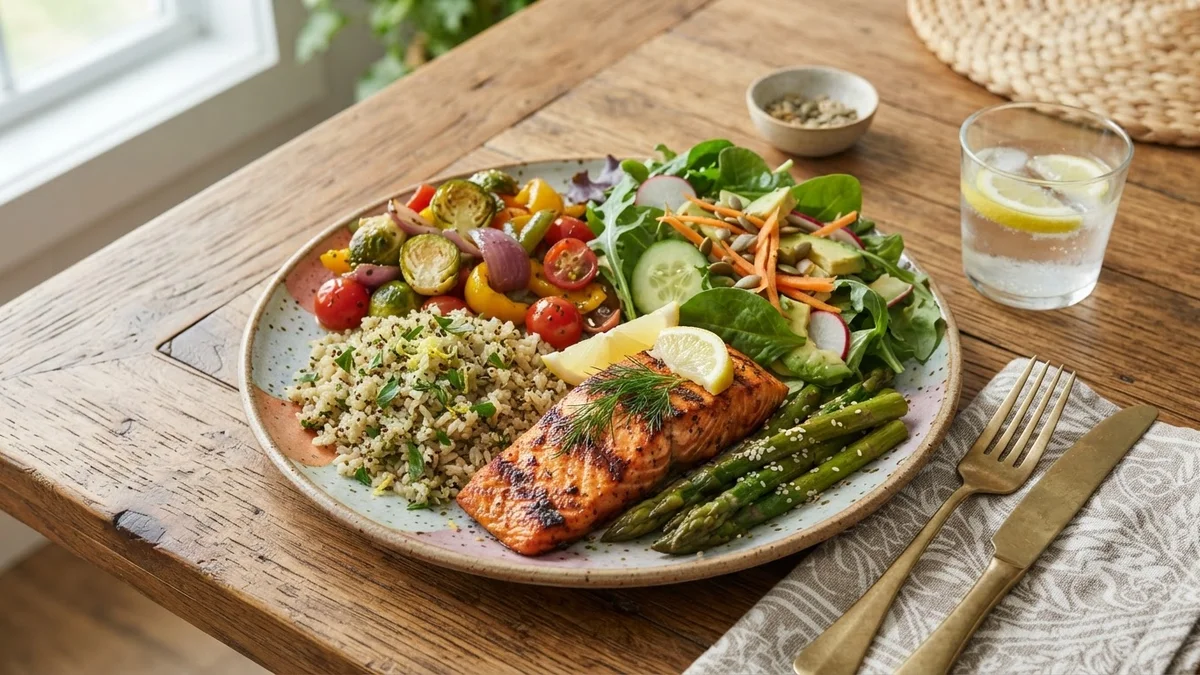
Healthy eating advice can feel confusing, with new diets and trends appearing all the time. Yet the basics of good nutrition are fairly simple and work across cultures and cuisines. One of the easiest tools is the balanced plate.
What Is the Balanced Plate?
Imagine your plate divided into sections. This visual guide helps you build meals with the right mix of nutrients without counting every calorie.
| Part of plate | Food group | Examples |
|---|---|---|
| Half | Vegetables and fruit | Leafy greens, carrots, tomatoes, beans, seasonal fruit |
| Quarter | Whole grains and starches | Brown rice, whole wheat roti or bread, oats, millets, potatoes |
| Quarter | Protein | Lentils, chickpeas, eggs, fish, chicken, tofu, paneer |
| Side | Healthy fats and drinks | A little oil, nuts or seeds; water instead of sugary drinks |
Fill Half the Plate With Vegetables and Fruit
Vegetables and fruit provide fibre, vitamins, minerals and protective plant compounds. Aim for a variety of colours through the week. Fresh, frozen and canned options without added sugar or salt all count.
Choose Whole Grains
Whole grains keep more fibre and nutrients than refined versions. They help you feel full for longer and support steady energy. Try swapping white bread, white rice or refined flour for whole-grain alternatives some of the time.
Include Protein at Each Meal
Protein helps maintain muscles and keeps you satisfied. Plant proteins such as beans and lentils are affordable and rich in fibre. Limit processed meats like sausages and bacon.
Go Easy on Salt, Sugar and Fried Foods
- Taste food before adding salt and use herbs and spices for flavour.
- Choose water, milk or unsweetened drinks over sodas and juices.
- Enjoy fried snacks and sweets as occasional treats.
- Read food labels to spot hidden salt and sugar.
Practical Tips
- Plan meals for the week and shop with a list.
- Cook at home more often so you control ingredients.
- Eat slowly and stop when comfortably full.
- Keep healthy snacks such as fruit, yoghurt or nuts within reach.
Special Needs
People with diabetes, kidney disease, allergies, pregnancy or other conditions may need tailored advice. A doctor or registered dietitian can help adjust the plate to your needs.
Conclusion
The balanced plate turns nutrition science into a simple daily habit. Fill half with vegetables and fruit, a quarter with whole grains and a quarter with protein, and you are already eating well.
Disclaimer: This article is for general information only and is not a substitute for professional medical advice. Always consult a qualified healthcare provider about your own situation.