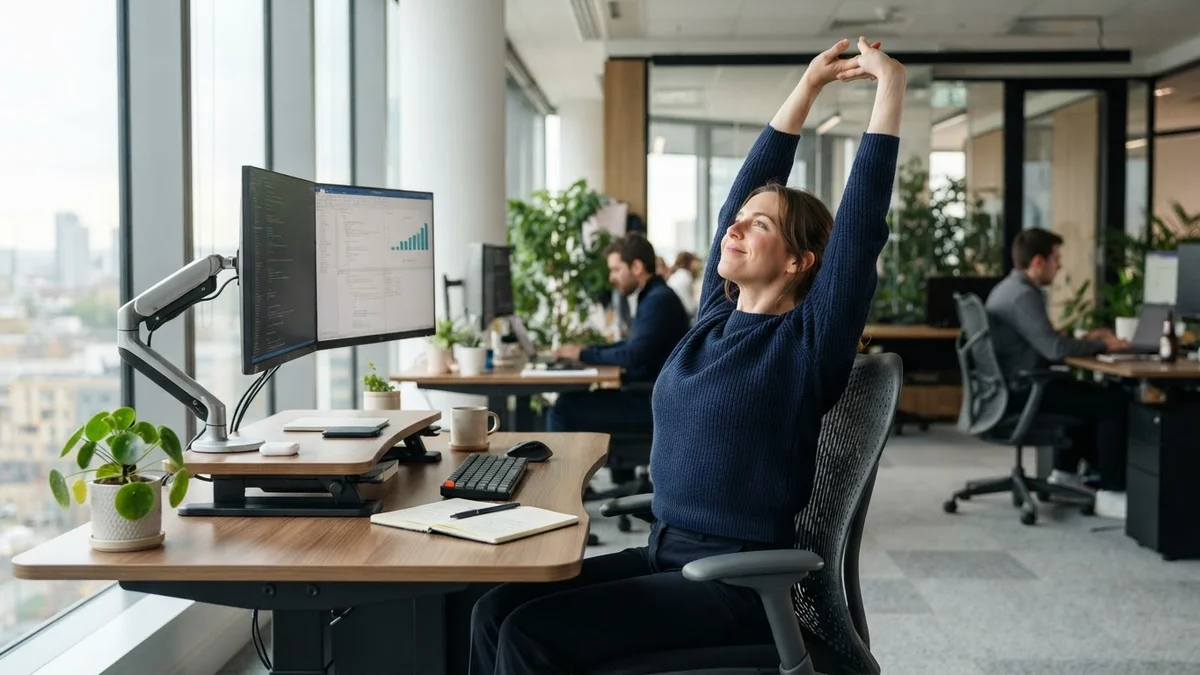
Many people spend most of their working day sitting at a desk. Long periods of sitting are linked to back and neck pain, stiff joints and lower overall activity. You do not have to change jobs to protect your health; a better workspace and regular movement can help a great deal.
Set Up an Ergonomic Workspace
| Area | Good setup |
|---|---|
| Chair | Supports the lower back; feet flat on the floor or a footrest |
| Knees and hips | Roughly level, with knees at about a right angle |
| Screen | Arm’s length away, top at or just below eye level |
| Keyboard and mouse | Close to the body, elbows relaxed by your sides |
| Laptop | Use a stand with a separate keyboard for long sessions |
Good Sitting Posture
- Sit back in the chair so your lower back is supported.
- Keep shoulders relaxed, not hunched towards the ears.
- Keep your head balanced over your shoulders rather than pushed forward.
- Avoid crossing your legs for long periods.
Move Every 30 to 60 Minutes
The best posture is the next one. Changing position often matters more than holding a perfect pose. Stand up, walk to get water, take calls standing or use stairs during breaks. Some people find sit-stand desks helpful, but standing all day has its own problems, so alternate.
Simple Desk Stretches
- Neck tilt: gently tilt your ear towards your shoulder and hold for 15 seconds on each side.
- Shoulder rolls: roll shoulders backwards slowly 10 times.
- Chest opener: clasp hands behind your back and gently lift your chest.
- Seated twist: sit tall and turn your upper body to each side, holding for 15 seconds.
- Wrist stretch: extend one arm and gently pull the fingers back with the other hand.
- Calf raises: stand and rise onto your toes 15 times.
Stretch gently and stop if you feel sharp pain.
Stay Active Outside Work
Regular exercise, such as walking, swimming, cycling or strength training, builds the muscles that support good posture. Core and back strengthening exercises are particularly helpful for people who sit a lot.
When to See a Professional
Seek advice from a doctor or physiotherapist if pain lasts more than a few weeks, spreads down an arm or leg, or comes with numbness, tingling or weakness.
Conclusion
A well-arranged desk, frequent position changes and a few simple stretches can protect your body during long working days. Small habits add up to fewer aches and more energy.
Disclaimer: This article is for general information only and is not a substitute for professional medical advice. Always consult a qualified healthcare provider about your own situation.