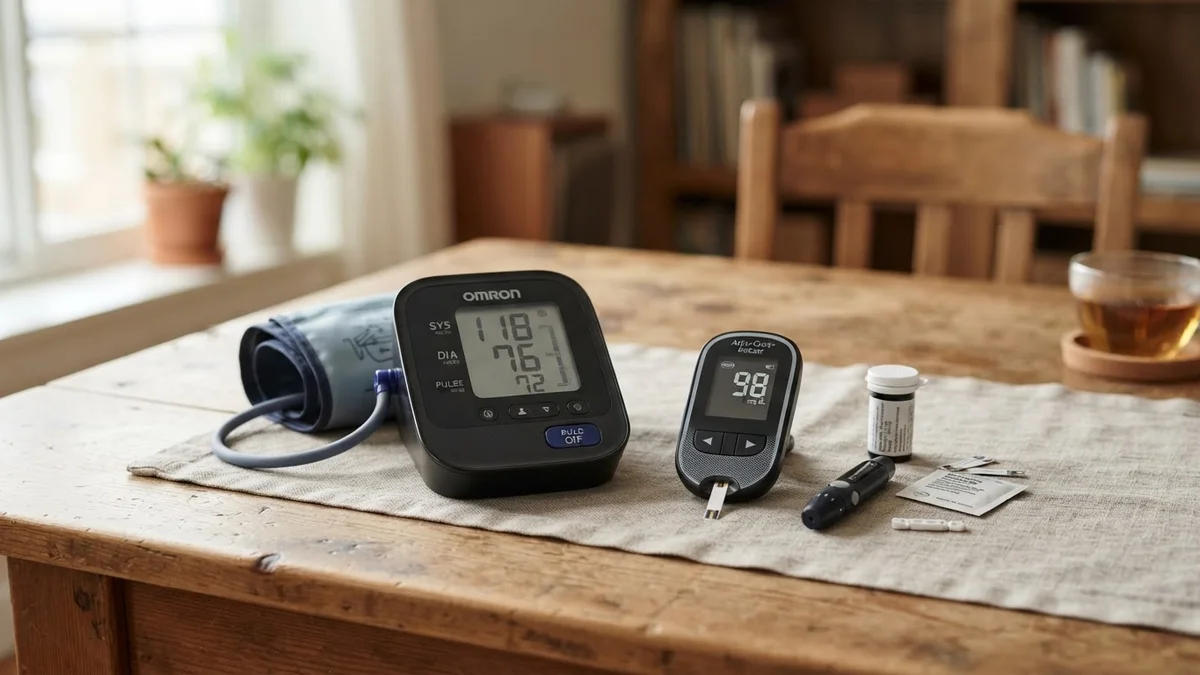
Some of the most important health risks do not cause symptoms until they have already done damage. High blood pressure, high blood sugar and high cholesterol can quietly increase the risk of heart attack, stroke, kidney disease and other problems. Knowing your numbers helps you and your doctor act early.
Blood Pressure
Blood pressure measures the force of blood against artery walls and is written as two numbers, such as 120/80 mmHg. The top number (systolic) is the pressure when the heart beats; the bottom number (diastolic) is the pressure between beats.
| Reading (general guide) | What it may mean |
|---|---|
| Below about 120/80 | Usually considered normal |
| Between about 120/80 and 140/90 | Elevated; lifestyle changes often advised |
| Repeatedly 140/90 or higher | Often classed as high blood pressure |
Exact thresholds vary between guidelines, so your doctor will interpret your readings.
Blood Sugar
Blood sugar tests check for diabetes and prediabetes. Common tests include fasting blood glucose and HbA1c, which reflects average blood sugar over about three months. Prediabetes is common and can often be reversed with weight management, healthy eating and regular activity.
Cholesterol
A lipid profile measures total cholesterol, LDL (“bad”) cholesterol, HDL (“good”) cholesterol and triglycerides. High LDL and triglycerides increase the risk of blocked arteries. Your target levels depend on your overall heart risk.
Other Useful Numbers
- Waist size: extra fat around the waist is linked to higher heart and diabetes risk.
- Body mass index (BMI): a rough guide to healthy weight for height.
- Resting heart rate: a general sign of fitness.
How Often to Check
Many adults should have blood pressure checked at least once a year, and blood sugar and cholesterol checked at intervals advised by their doctor based on age, family history and risk factors. People with existing conditions need more frequent monitoring.
Improving Your Numbers
- Eat more vegetables, fruit, whole grains and pulses.
- Reduce salt, sugar and processed foods.
- Be active most days of the week.
- Maintain a healthy weight.
- Avoid tobacco and limit alcohol.
- Take prescribed medicines as directed.
Conclusion
Your health numbers are early warning signals. Check them regularly, keep a record and work with your doctor to keep them in a healthy range.
Disclaimer: This article is for general information only and is not a substitute for professional medical advice. Always consult a qualified healthcare provider about your own situation.